
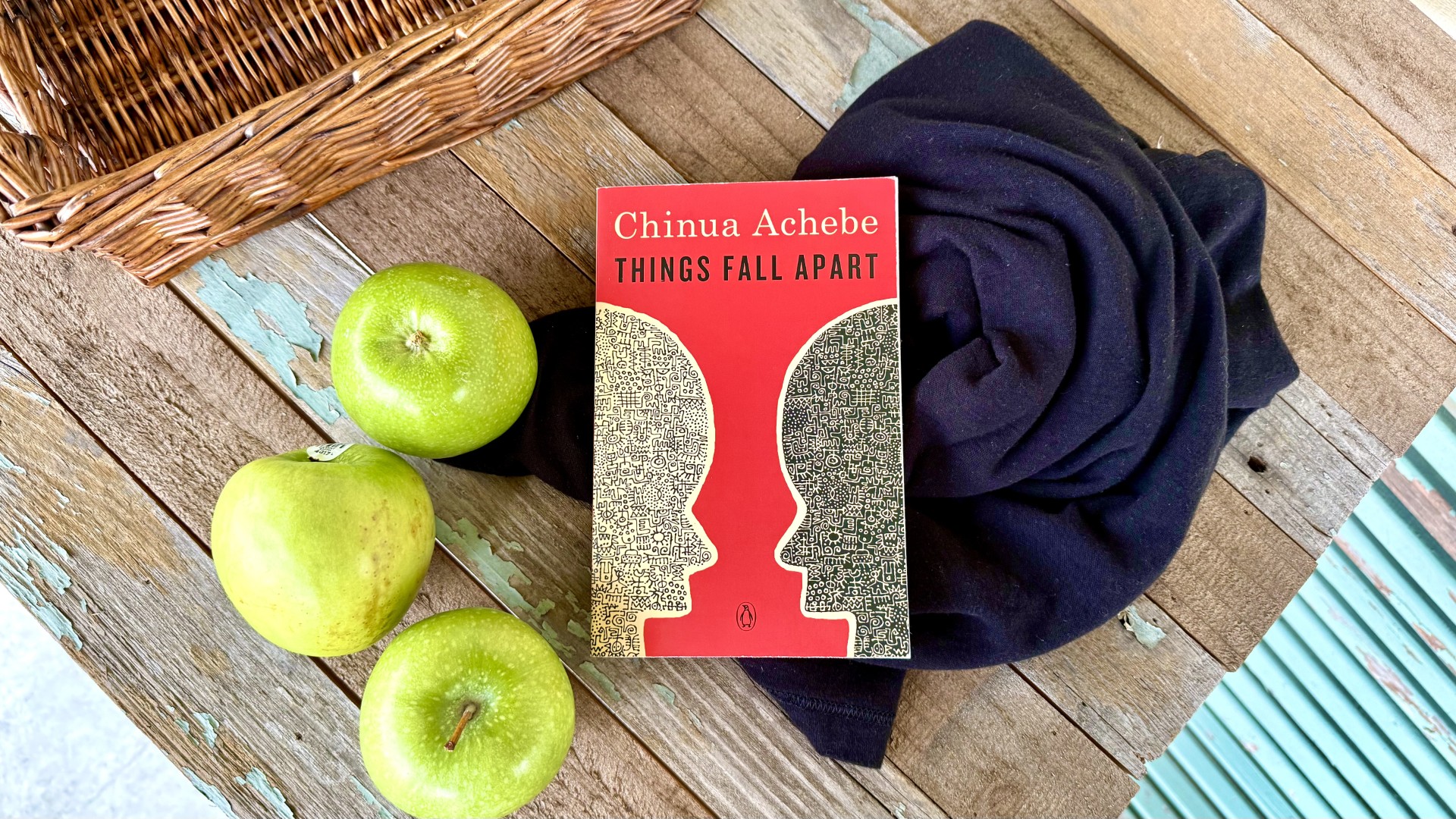
Chinua Achebe is considered one of the most influential African writers of the 21st century, and for good reason. He offers a sustaining moral vision for African culture as an identity. His stories don’t present romanticized or idealized views of pre-colonist Africa; rather, they present realistic ones. Things Fall Apart was introduced to me in a World Literature class, a direct contrast to another classic portrayal of African culture I’d read previously (Heart of Darkness by Joseph Conrad). Let’s jump in!

With more than twenty million copies sold and translated into fifty-seven languages, Things Fall Apart provides one of the most illuminating and permanent monuments to African experience. Achebe does not only capture life in a pre-colonial African village, he conveys the tragedy of the loss of that world while broadening our understanding of our contemporary realities.
Things Fall Apart is the first of three novels in Chinua Achebe’s critically acclaimed African Trilogy. It is a classic narrative about Africa’s cataclysmic encounter with Europe as it establishes a colonial presence on the continent. Told through the fictional experiences of Okonkwo, a wealthy and fearless Igbo warrior of Umuofia in the late 1800s, Things Fall Apart explores one man’s futile resistance to the devaluing of his Igbo traditions by British political and religious forces and his despair as his community capitulates to the powerful new order.
World, Character, and Plot
Things Fall Apart portrays traditional African society from an insider’s point of view, following the character of Okonkwo. He’s the “hero” in his society, a great wrestler and influential leader. He struggles, however, with one flaw (the same flaw that destroyed tragic heroes like Odysseus): pride. Through Okonkwo’s story, Achebe reminds the reader that the greater the man, the greater the fall.
Achebe captures the native African culture of Onkonkwo’s village by incorporating traditional folk tales, stories, customs, proverbs, words, and metaphors throughout the text. This hybrid form of storytelling was incredible. The man has a way with words; despite this being a “classic” novel, I couldn’t put it down. It brought every emotion a modern action film might (shock, tears, etc).
Okonkwo is a fascinating character in that, as a reader, you sympathize with him while simultaneously disagreeing with almost every choice he makes. He’s a womanizer, a hot-tempered man, and a poor father. Things Fall Apart isn’t necessarily promoting his choices or the culture he desperately is hanging on to. It’s showing us as readers what it means for a culture to be erased.
PAGED IN: While language and sexual content are not present in Things Fall Apart, there is certainly an abundance of violence. It’s not graphic, but some of the descriptions might be shocking (especially for younger readers). Do some research on traditions in ancient African tribes if you need clarification on what I mean.
Conclusion
Joseph Conrad’s Heart of Darkness was the one of the first books that gave exposure to the cultures of Africa. Unfortunately, it gives a racist and prejudicial view of Africa. And, because of its popularity, it shaped the way many readers viewed African culture. One of the reasons Achebe began writing Things Fall Apart was to provide an alternative to Heart of Darkness’s distorted view of native African culture. Did it succeed? I think so. While sad and oftentimes violent, Things Fall Apart gives a great representation of a culture rarely explored. It’s definitely worth reading.
You can buy Things Falls Apart here.
Marie